
Not sure if your website's working for you? Let's talk it through - coffee locally or a call, no time limit.
Not sure if your website's working for you? Let's talk it through - coffee locally or a call, no time limit.
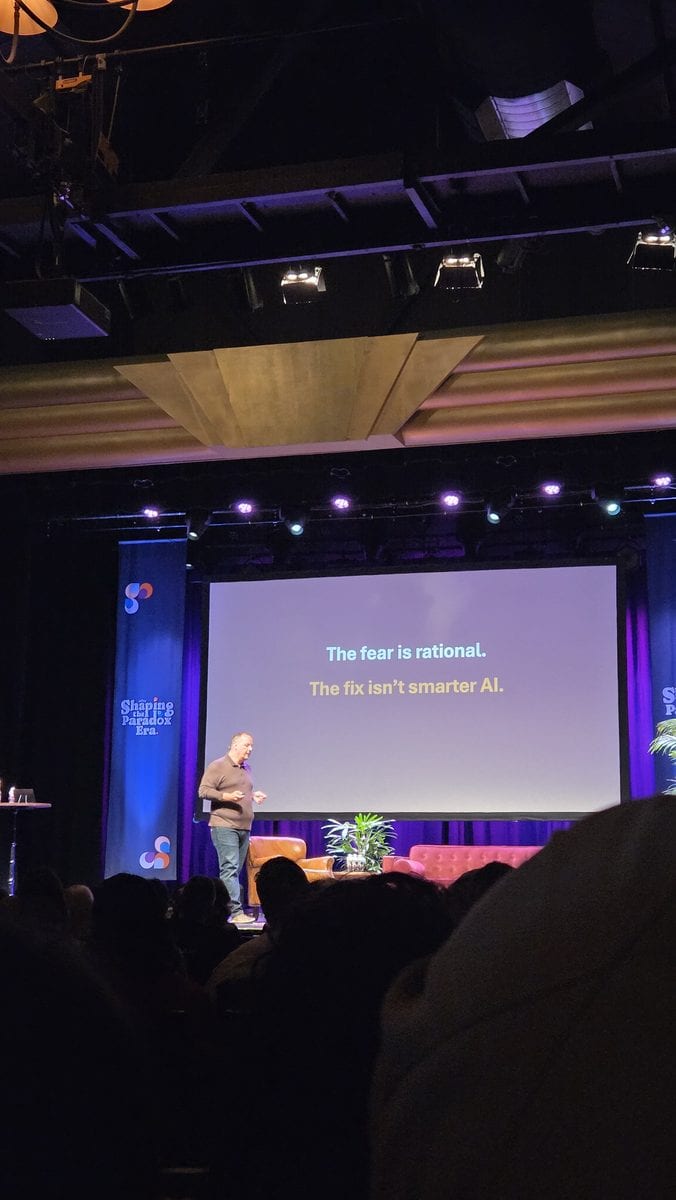
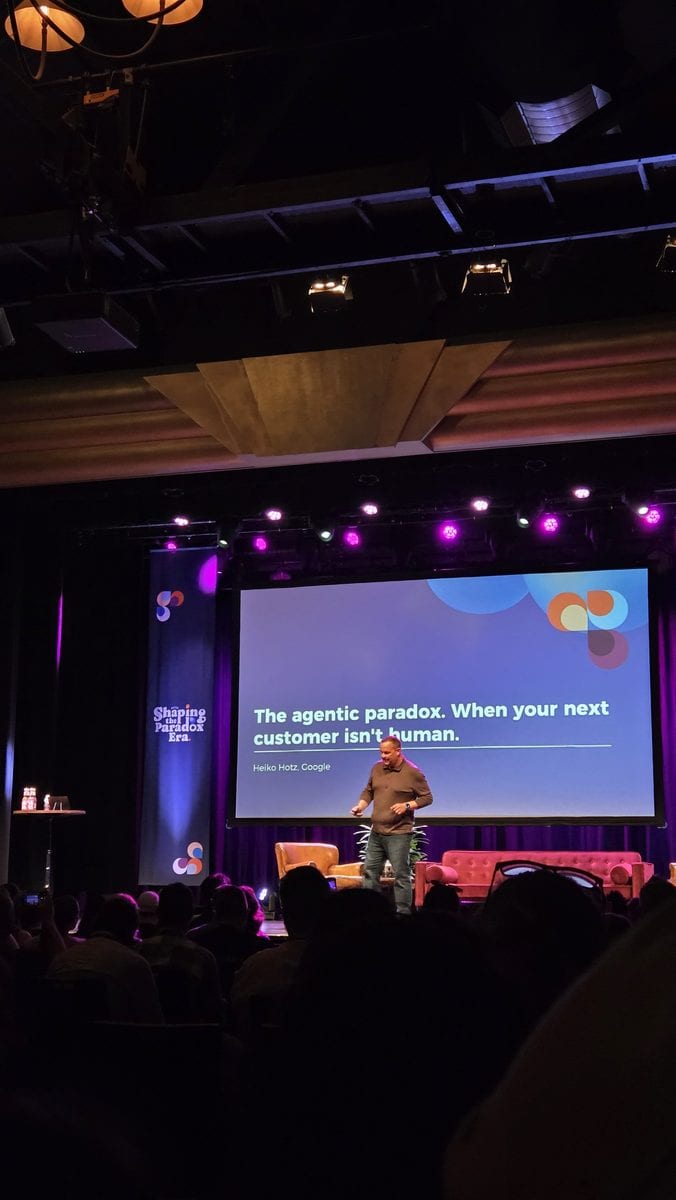
At Something Digital this week, Heiko Hotz from Google demonstrated something I haven't been able to stop thinking about since.
He'd been testing how AI shopping agents choose between products. Two identical items at the same price, one with more features listed in its data, and the agent picked the one that told it more. Fair enough, that's roughly what you'd expect. Then they asked the far better question, which was how much cheaper the other product had to get before the agent changed its mind.
The bit that really got me, though, was the decoy test. The decoy effect is an old sales trick and you have absolutely fallen for it at some point. You put a deliberately unappealing middle option between the cheap one and the premium one, and suddenly the premium option looks like a sensible decision rather than an indulgence. It's the reason the medium popcorn exists. They ran that on an AI agent, and the agent fell for it too.

Most people's first reaction is that it's funny, and it is. We trained these things on us, so of course they picked up a few of our worse habits along the way.
I got stuck on a different part of it. A model can explain the decoy effect to you perfectly well. Ask it what the decoy effect is and it'll define the thing, give you examples, tell you it's a well documented bias in human decision making, possibly mention the popcorn. It knows the trick by name and can describe how the trick works. And then it walks straight into it anyway.
That's not a one-off either, which I only found out afterwards. Researchers have tested this properly across several different AI models, running classic persuasion tactics through product recommendations to see what sticks. Social proof made products dramatically more likely to be recommended. The bigger, more capable models with reasoning built into them weren't meaningfully more resistant than the smaller ones. And when the researchers explicitly instructed the models to ignore the persuasion and judge on features alone, it still worked on them.
There's one finding in there worth knowing if you sell anything at all. Scarcity and exclusivity, which work beautifully on humans, made products roughly 30% less likely to be recommended. So the "only 2 left, hurry" banner that's been quietly converting for you may now be working against you with the very thing that's increasingly doing the choosing.
The argument everyone walked out with went something like this. To a person, your website is a brand experience. To an agent, it's structured data. An agent doesn't care about your hero image or your carefully worded copy, it cares about what it can read, compare and verify, so the product with the best marketing may well lose to the product with the clearest machine-readable evidence.
For e-commerce I think that's dead right, and it's already happening. Buying a standard laptop charger involves no relationship whatsoever. It's a commodity with specifications, so whoever's data is cleanest and most complete is going to win, and that spreadsheet of product attributes nobody ever wanted to own suddenly matters more than the photography does.
The underlying point holds for everyone, too. Vague claims are worth nothing to a machine, because "fast, friendly, reliable" can't be checked against anything. Having a different phone number on your website, your Google profile and your Facebook page has gone from untidy to an actual problem. It's the same argument I made about being cited rather than just ranking, and it applies here just as much.
Here's my honest read on it, and I'm very happy to be proven wrong.
A laptop charger and a plumber are not the same purchase, and I don't think we should pretend they are. When someone's choosing a tradie they aren't comparing specifications, they're deciding whether they trust a stranger enough to let him into their house while their kids are home. When someone's choosing an accountant to do their BAS every quarter, a fair chunk of that decision is whether this person is going to make them feel stupid on the phone. Neither of those is a data problem, and no amount of clean structured markup answers the question of whether someone will turn up when they said they would.
So yes, an agent is going to read those websites. It'll compare them, shortlist them, and hand its human a tidy list of recommendations. I just don't think the human stops there. I think they click through, because that's what people do. They look at the photos of finished work to see whether it looks like the standard they want. They look at the face of the person who'll be knocking on their door. They read a bit more about the accountant and get a feel for whether they'd actually want to sit across a desk from them once a quarter.
That's most of what a service business website is for, and I don't think an agent replaces it any time soon. It's a trust document, and it always has been.
If I'm right about this, the job just got bigger rather than different, because you now have to satisfy two readers who want completely different things from the same page.
The agent decides whether you make the shortlist, and that's the unglamorous half. It wants real facts on your service pages instead of adjectives, prices or ranges wherever you can give them, service areas, response times, licence numbers, qualifications. It wants schema markup so it isn't left guessing, your business details written the same way in every place they appear, and specific claims rather than "trusted by hundreds of happy customers."
The human decides whether you get the job, and that's the half everyone's suddenly nervous about, which I think is misplaced. That half wants photos of your actual work rather than stock images, a real face with a real name attached, proof you've done this exact job before, and copy that sounds like a person your customer would be comfortable ringing.
Most of the service business websites I look at manage neither. They've got a nice hero image, six paragraphs of adjectives, not a single fact a machine could use, and no photographs a human could trust. That was a problem long before anyone started worrying about agents.
Everything above is an opinion I formed at a conference three days ago about a technology that's moving quickly, so take it accordingly. Heiko was careful to frame his own version as a suspicion rather than a certainty, and it would be a bit rich of me not to do the same.
I could easily be wrong about the timeframe. If agents get good enough at reading photographs, judging tone and weighing up reviews, then the trust gap I'm describing closes and service businesses end up exactly where e-commerce is now. All I'd say is that people don't currently outsource "who am I letting into my house" to software, and I'm not convinced they'll be in a hurry to.
What I'm confident about either way is the boring half of it. Clean data, specific claims, consistent details and a website that actually works are worth doing regardless of which way any of this lands. That's the nice thing about unglamorous advice. It doesn't need a prediction to come true to be right.
If you want to know how your site reads to both audiences, that's largely what an audit does now. Or have a chat with me about it. I'd genuinely like to hear from anyone who thinks I've got the service business part of this wrong.